The wildebeest herds usually reach Kenya's Masai Mara between late July and October, with the Mara River crossings most likely from late July to early September. Plan at least four nights in or beside the reserve, and book camps six to twelve months ahead for peak weeks.
Roughly a million and a half wildebeest move on a loop that ignores borders and calendars. Here is how the migration actually behaves, and how to plan a safari around it without relying on luck.
- Crossing season in the Mara: late July to early September in most years.
- Four nights minimum on the ground materially improves your odds of a crossing.
- Conservancies bordering the reserve trade the crossings for space and off road access.
- Peak season camps sell out first. The date is the constraint, not the budget.
What the migration actually is
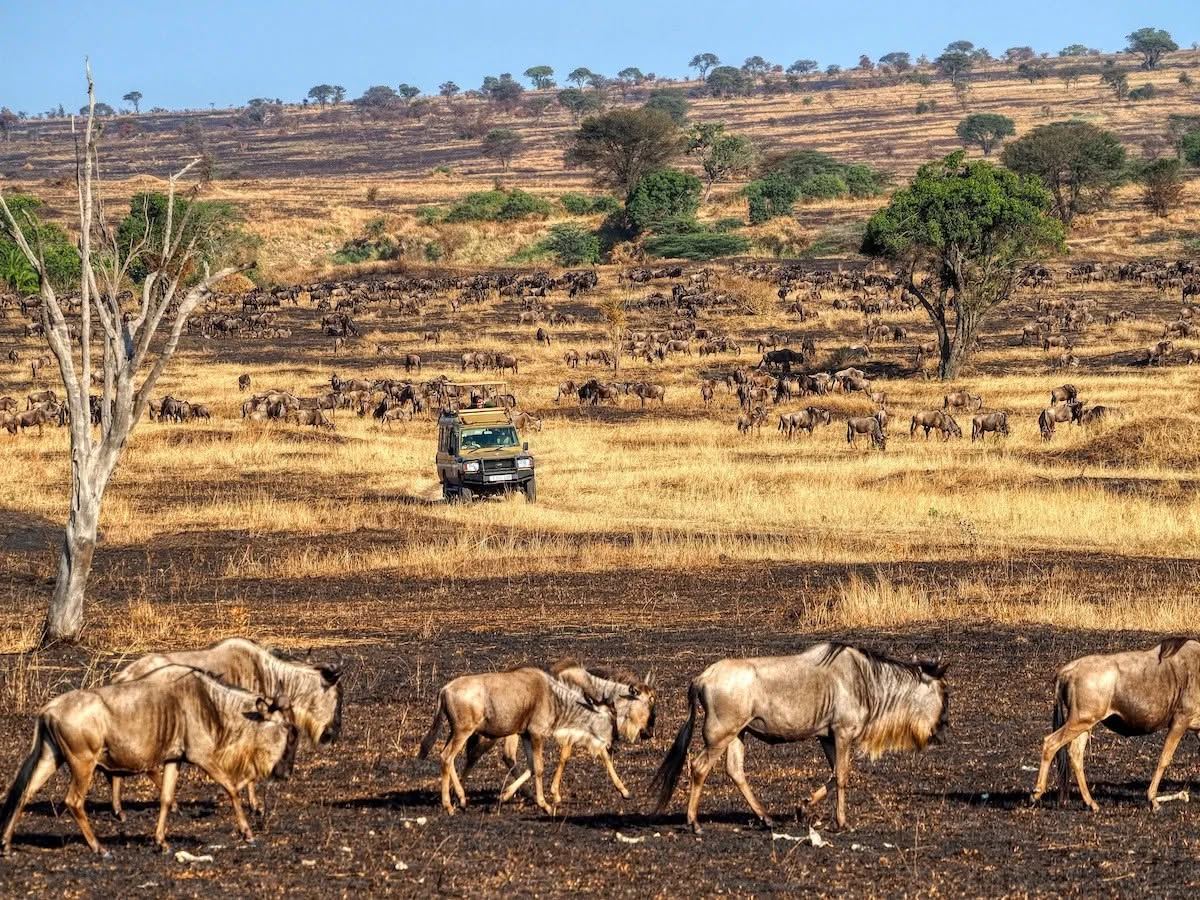
The Great Migration is not an event with a start time. It is a continuous, clockwise circuit driven by rainfall and grass, running between Tanzania's Serengeti and Kenya's Masai Mara. Wildebeest do the heavy lifting, joined by zebra and eland, and shadowed the entire way by lion, hyena, cheetah and crocodile.
That single fact changes how you plan. You are not booking a ticket to a performance, you are positioning yourself in the right place during the weeks when the herds are most likely to be there, then giving yourself enough days for the odds to work in your favour.
Month by month, where the herds usually are
Rain shifts these windows by weeks in either direction. Treat the table as a planning tool rather than a timetable, and expect your guide to be reading daily reports rather than a calendar.
| Months | Where the herds usually are | What you come for |
|---|---|---|
| January to March | Southern Serengeti, Ndutu plains | Calving season, predators at close quarters |
| April to May | Central and western Serengeti | Green season, low prices, some rain |
| June to July | Western corridor, Grumeti River | Herds massing, first river crossings |
| Late July to September | Masai Mara, Mara River | The Mara River crossings |
| October | Mara, drifting back south | Thinner crowds, herds still present |
| November to December | Northern to central Serengeti | Short rains, herds moving south |
Where the crossings happen
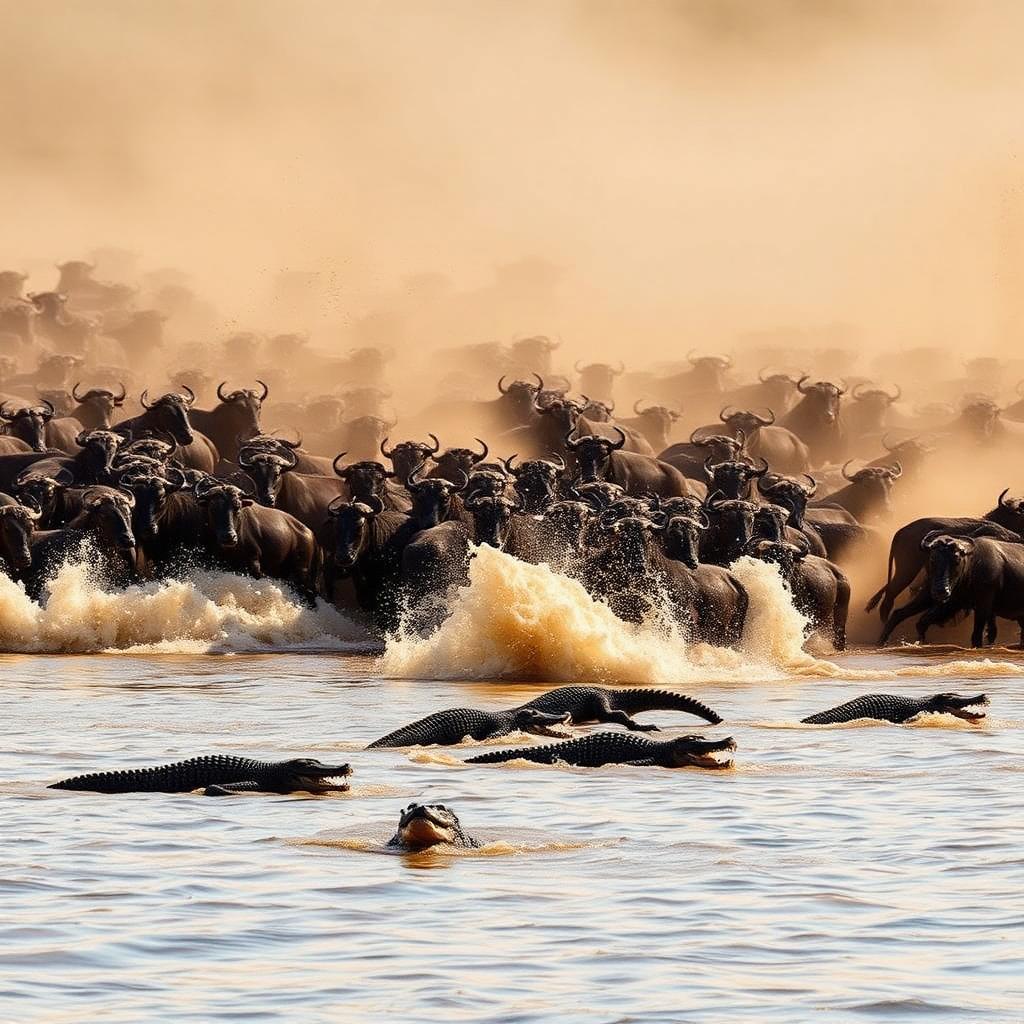
Most photographed crossings occur along the Mara River between the Mara Triangle and the eastern reserve, with a smaller cast crossing the Talek. Guides watch specific bends where the banks are shallow enough for wildebeest to commit, and there are days when thousands mass for hours and never go in.
This is where an honest operator matters. Nobody can promise a crossing on a particular morning. What we can do is put you in a camp within reach of the active bends, keep you out from dawn with packed breakfast, and stay while other vehicles leave for lunch.
Booking two nights in crossing season. Two nights gives you roughly one and a half usable game drive days. Four nights turns a gamble into a strong probability.
Get on the right side of the Mara River
Crossing season fills the best camps first. Share your travel window and we will tell you honestly what is still available and where to position yourself.
Reserve or conservancy during migration
The crossings happen inside the national reserve, so if the river is your priority you stay in or beside it and accept company at sightings. The private conservancies on the northern boundary cap vehicle numbers, permit off road driving and night drives, and hold resident big cats year round.
Our most common recommendation for a first migration trip is a split: three nights in the reserve for the river, two in a conservancy for the quiet. It reads like a compromise on paper and works extremely well in practice.
What a migration safari costs
Prices rise in July and drop again in November for the same camps, same vehicles and same guides. The premium is for the dates, not for a different product.
Rather than publish a figure that ages badly, we quote per itinerary: park fees, conservancy levies, camp category, private vehicle and whether you fly or drive to the Mara. Ask for the breakdown from anyone you speak to. A quote missing park fees will always look cheaper than one that includes them.
Kenya or Tanzania for the migration
If you want river crossings and you can travel in August or September, Kenya is the straightforward answer, with the added advantage that the Mara sits a 45 minute flight from Nairobi. If you can only travel between January and March, Tanzania's southern Serengeti during calving season is the better trip, and arguably better for predator behaviour.
For travellers with ten days or more, doing both in one journey is not excessive. Our cross border itineraries run Mara to Serengeti with a Ngorongoro night in between.
Frequently asked
- When is the best time to see the wildebeest migration in Kenya?
- Late July to early September is the strongest window for Mara River crossings, with herds usually present in the Masai Mara until October.
- How many days do I need for a migration safari?
- Four nights in the Mara is the realistic minimum if a river crossing is your priority. Three nights works if you simply want to see the herds and the predators following them.
- Can you guarantee I will see a river crossing?
- No honest operator can. We position you within reach of the active crossing points, start before dawn and stay out long, which is what actually improves the odds.
- Is the migration worth the peak season premium?
- If the crossings are the reason you are travelling, yes. If you mainly want big cats and space, a green season or shoulder month safari gives you more for less.
Get on the right side of the Mara River
Crossing season fills the best camps first. Share your travel window and we will tell you honestly what is still available and where to position yourself.