How to plan a Serengeti safari, where to stay, when the migration moves through, and how it differs from Kenya's Masai Mara.
Scale is the whole story
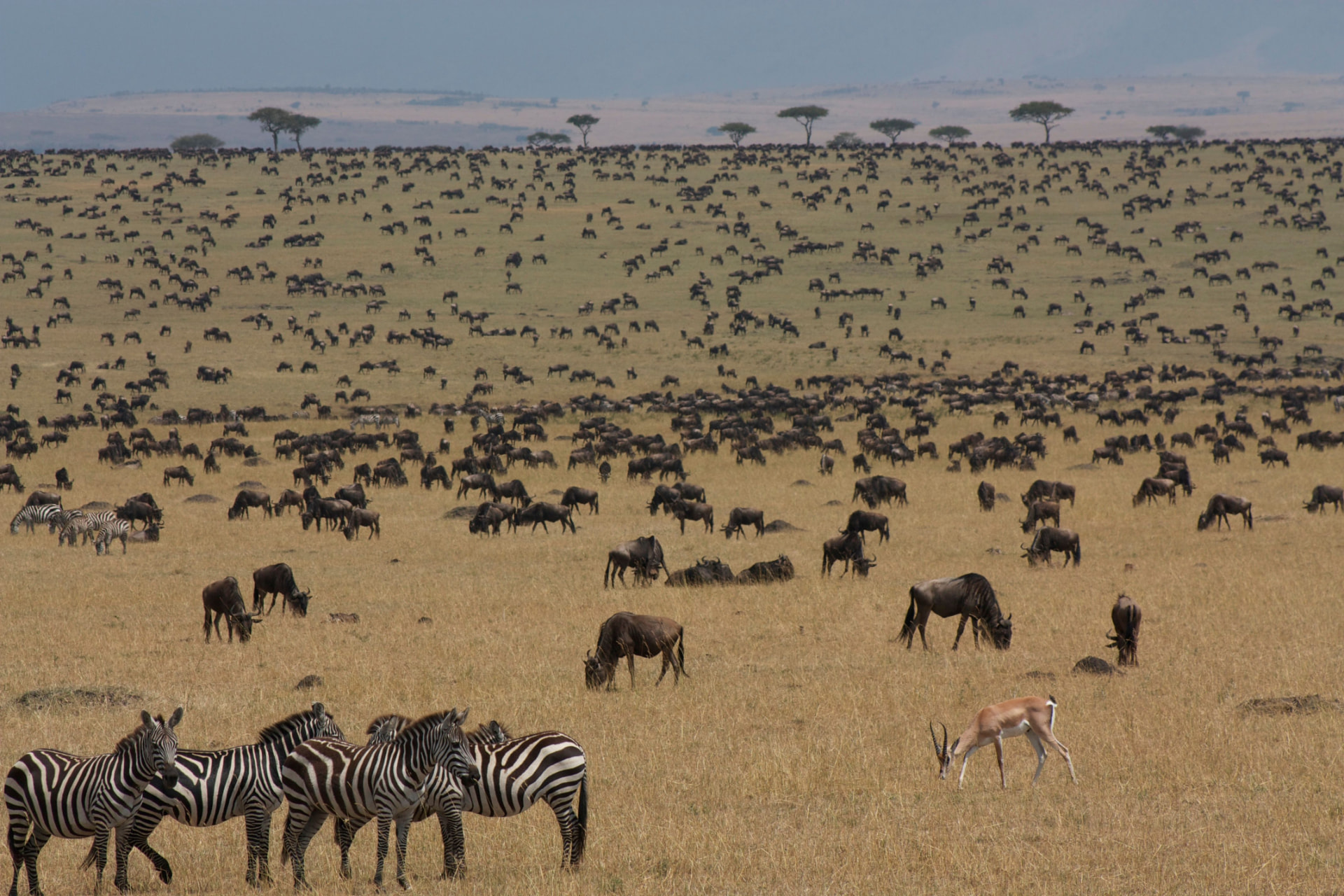
The Serengeti is enormous, roughly 14,750 square kilometres, more than eight times the size of the Masai Mara. That scale means the wildebeest migration spends most of the year somewhere inside its boundaries, moving in a broadly predictable clockwise loop through the year.
Where the migration is, month by month
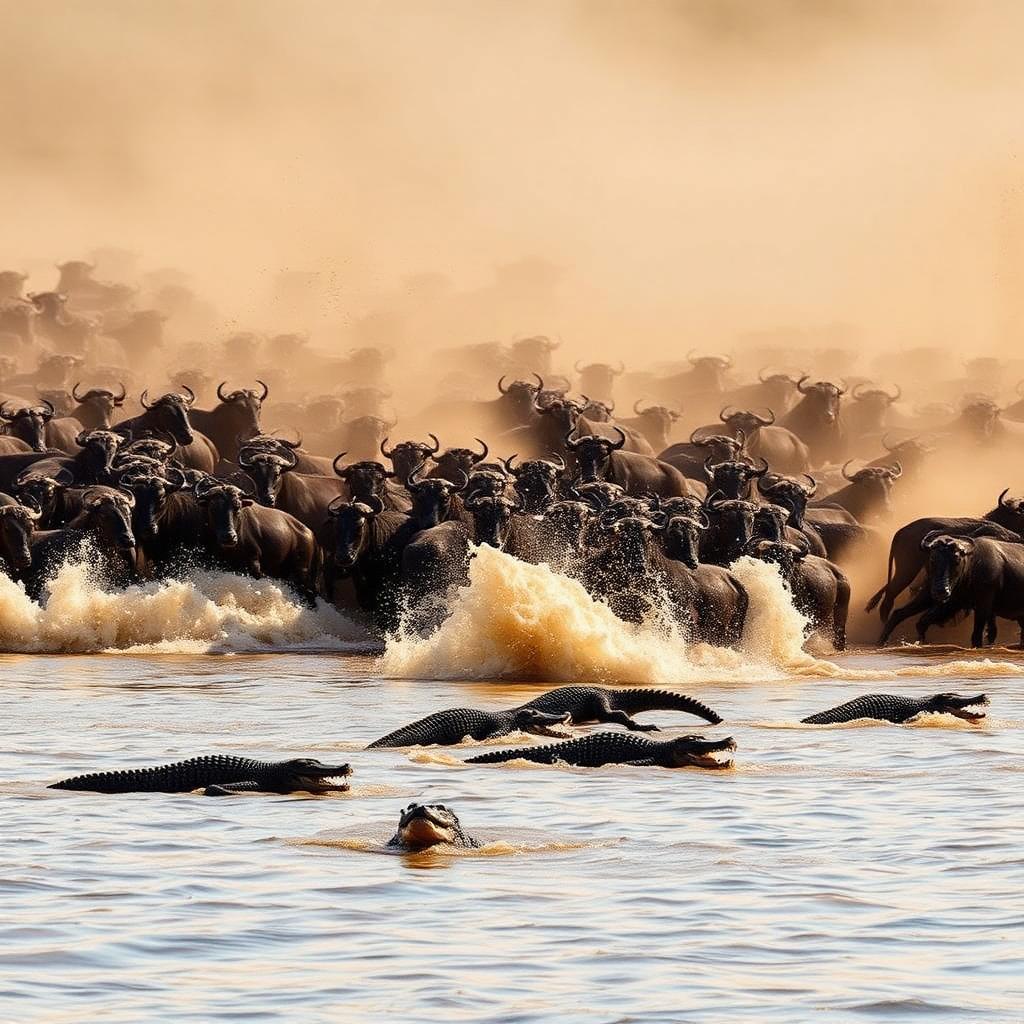
December to March, the herds calve on the southern short-grass plains near Ndutu. April to May they move through the central Seronera region. June to July they push north toward the Grumeti River. August to October they're typically in the northern Serengeti and crossing into Kenya's Mara. Booking the right region for your travel dates matters more in the Serengeti than almost any other park in Africa.
Tell us your dates, we will send back a real itinerary
A consultant reads every enquiry personally and replies with routing, camps and a full price breakdown. No call centre, no template.
Serengeti vs. Masai Mara, which to choose
If you only have one Kenya-or-Tanzania trip in you: the Mara is more affordable and easier to combine with a shorter Kenya-only itinerary. The Serengeti offers more space, fewer vehicles per sighting outside the main crossing points, and pairs naturally with Ngorongoro Crater and Tarangire on a longer Tanzania-only circuit.
Getting there
Most visitors fly into Kilimanjaro International or Arusha, then take a short bush flight or a long scenic road transfer into the park. Combining Serengeti with Ngorongoro Crater and Lake Manyara on a single circuit is the standard, and genuinely worthwhile, approach.
Tell us your dates, we will send back a real itinerary
A consultant reads every enquiry personally and replies with routing, camps and a full price breakdown. No call centre, no template.