Northern Circuit
Arusha, Tarangire, Lake Manyara, Ngorongoro, Serengeti
The classic first Tanzania safari. Varied landscapes, strong big cat viewing and the best base for Great Migration trips. Parks are linked by road, with flights as an option.
Private, tailor-made Tanzania safaris through the Serengeti, the Ngorongoro Crater and Tarangire, planned honestly around the season and finished on a Zanzibar beach if you wish.
A Kenya-based team that plans and runs safaris in the region.
Your own vehicle, guide and pace. No fixed group departures.
One team for the Mara, the Serengeti and the coast.
A real consultant on WhatsApp and email, before and during your trip.
A Tanzania safari is one of the great wildlife journeys on earth. The country protects a large share of its land in national parks and conservation areas, and its northern parks sit close enough together to explore in a single week.
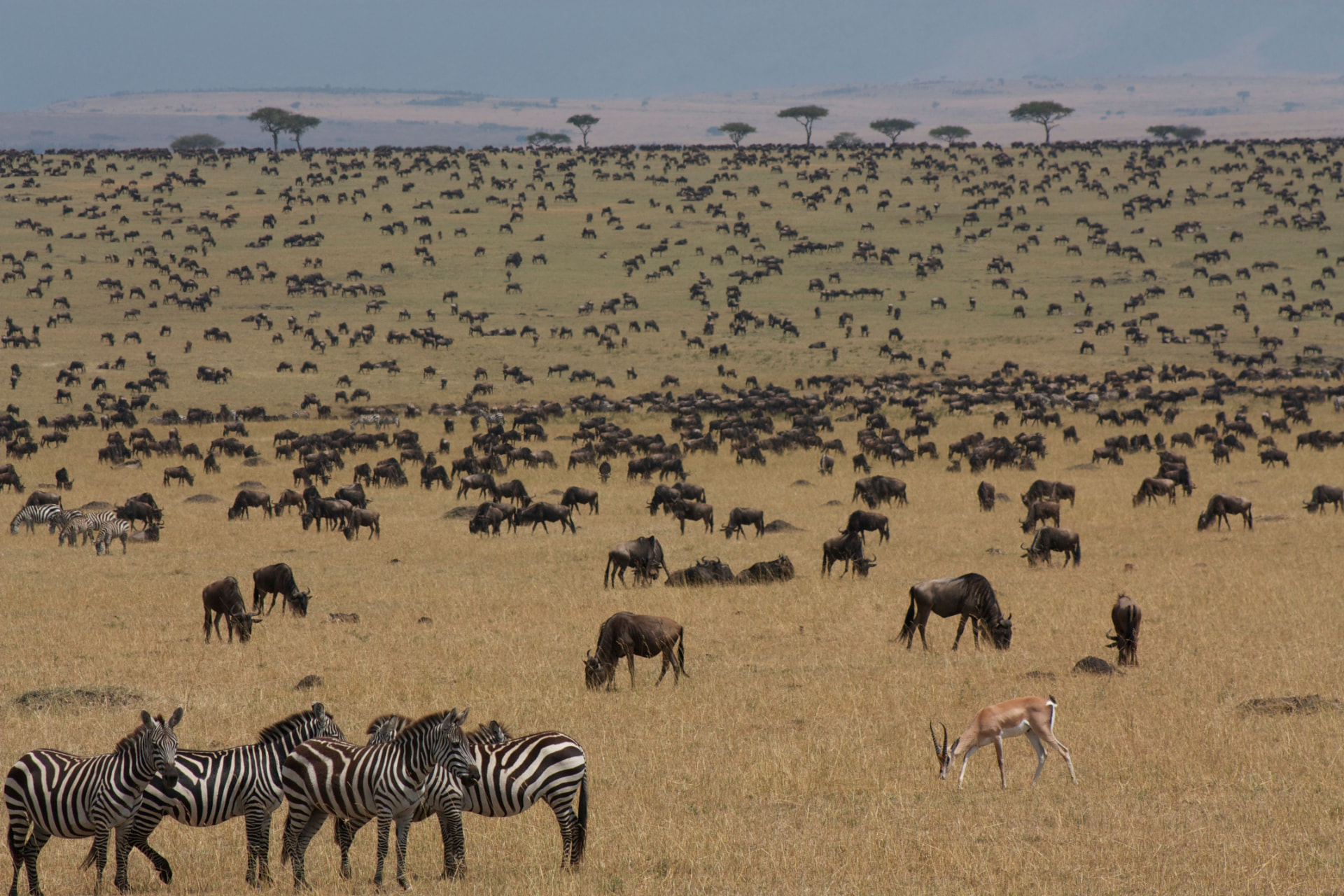
The Serengeti alone is a vast ecosystem of open plains, rocky kopjes and river woodland, home to lion, leopard and cheetah all year and to the herds of the Great Migration as they follow the rain. Next door, the Ngorongoro Crater gives you dense wildlife viewing inside a dramatic volcanic bowl.
Then there is the variety. In one Tanzania holiday you can watch elephants under baobab trees in Tarangire, drive the crater floor at sunrise, follow big cats across the Serengeti and finish with warm sea and white sand on Zanzibar. Few countries offer that range on one trip.
We plan every Tanzania tour as a private trip, with your own vehicle and guide, so the days run at your pace rather than a group's.
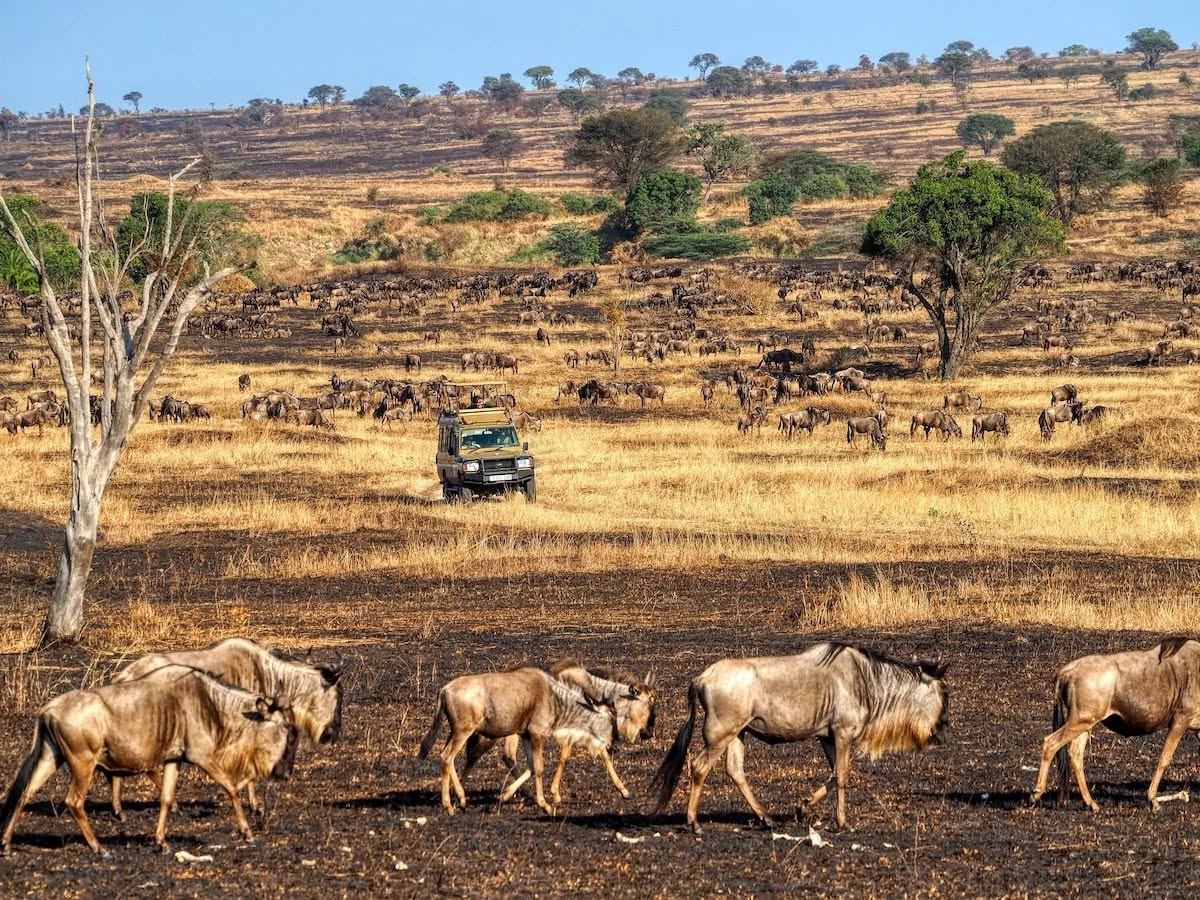
Tanzania is big, so most trips focus on one region. The right circuit depends on your travel month, trip length, budget, the wildlife you most want to see and the pace you enjoy.
The classic first Tanzania safari. Varied landscapes, strong big cat viewing and the best base for Great Migration trips. Parks are linked by road, with flights as an option.
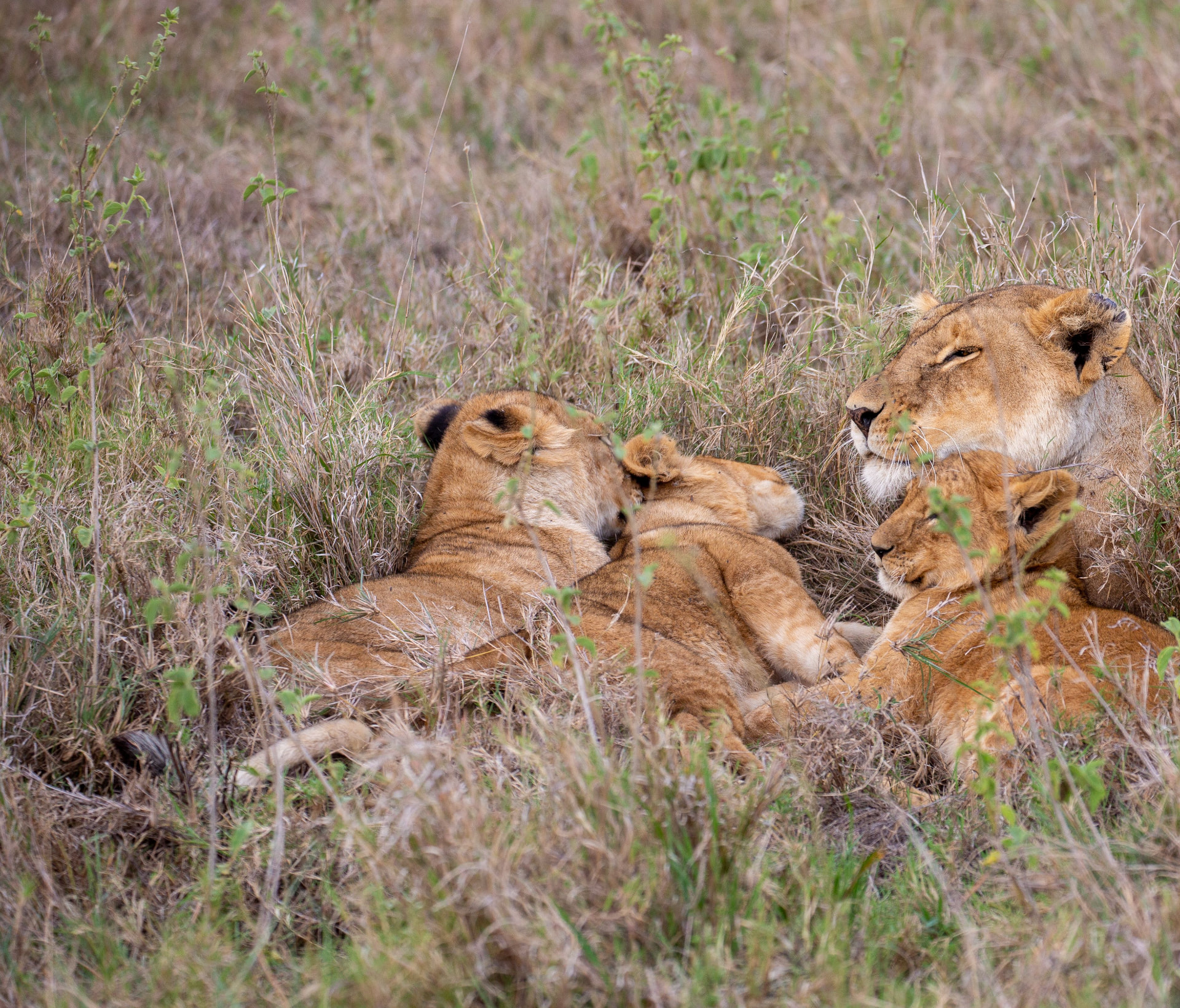
Big, remote wilderness with a quieter feel and fewer vehicles. Distances are long, so these trips often need extra days or light aircraft flights.
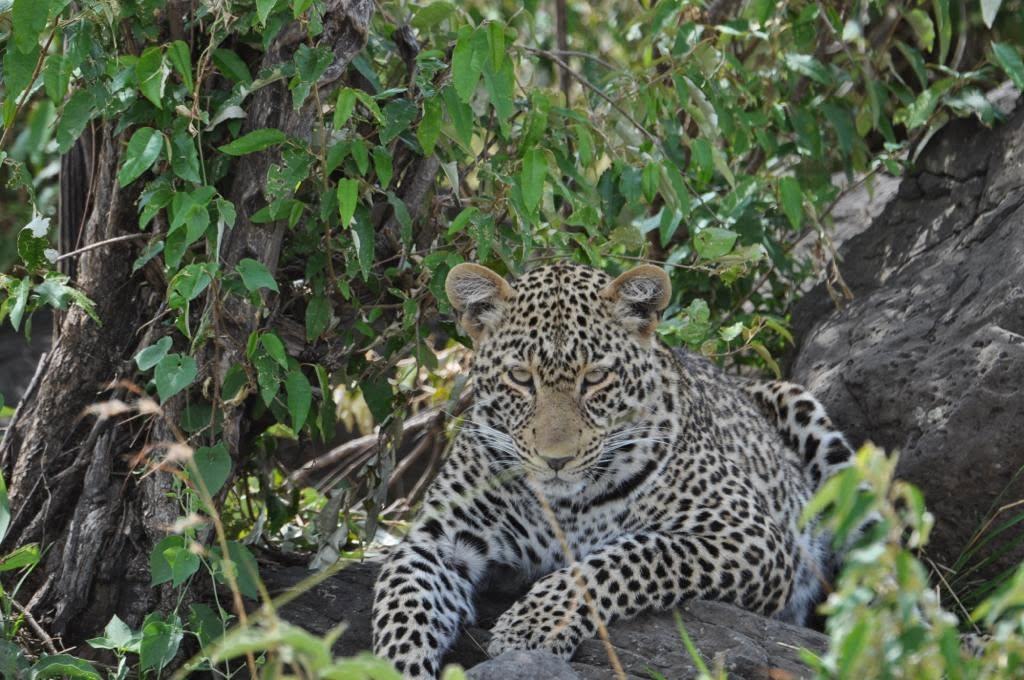
Chimpanzee trekking on the shores of Lake Tanganyika and some of Africa's most remote parks. Logistics are more complex, so these suit travellers with time.
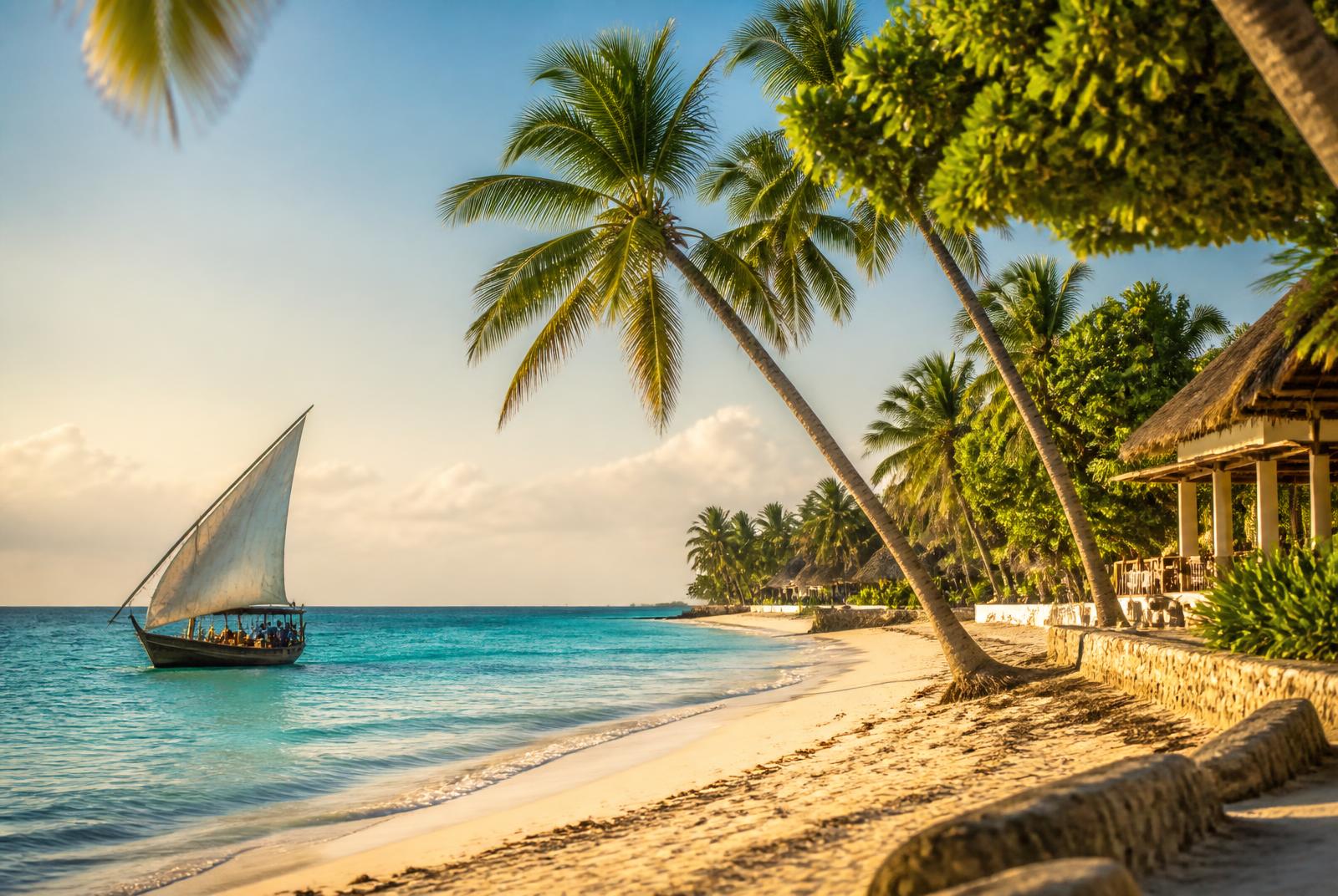
The natural finish to a safari. White beaches, reef snorkelling, diving and Swahili history, usually reached by a short flight from the mainland.
Arusha is the gateway to the Northern Circuit. Most international visitors land at Kilimanjaro International Airport, rest for a night in or near Arusha, and set off for Tarangire the next morning. An Arusha safari start also makes it easy to add a coffee farm visit, a walk on the slopes of Mount Meru or a night at the end of the trip before flying home.
A safari from Dar es Salaam usually points south. Mikumi National Park can be reached by road for a short trip, while Nyerere and Ruaha are often reached by light aircraft. Dar es Salaam is also a short hop from Zanzibar, which makes a southern safari and beach holiday a good fit for repeat visitors.
For a first Tanzania safari, the Northern Circuit is usually the best choice. It is where our Tanzania safari packages are based, and it connects easily with Zanzibar and with the Maasai Mara in Kenya.
The Serengeti is not one place but several. Where you stay matters as much as when you go. The central Serengeti around Seronera has strong resident wildlife and predator viewing throughout the year, which makes it a reliable choice in any month.
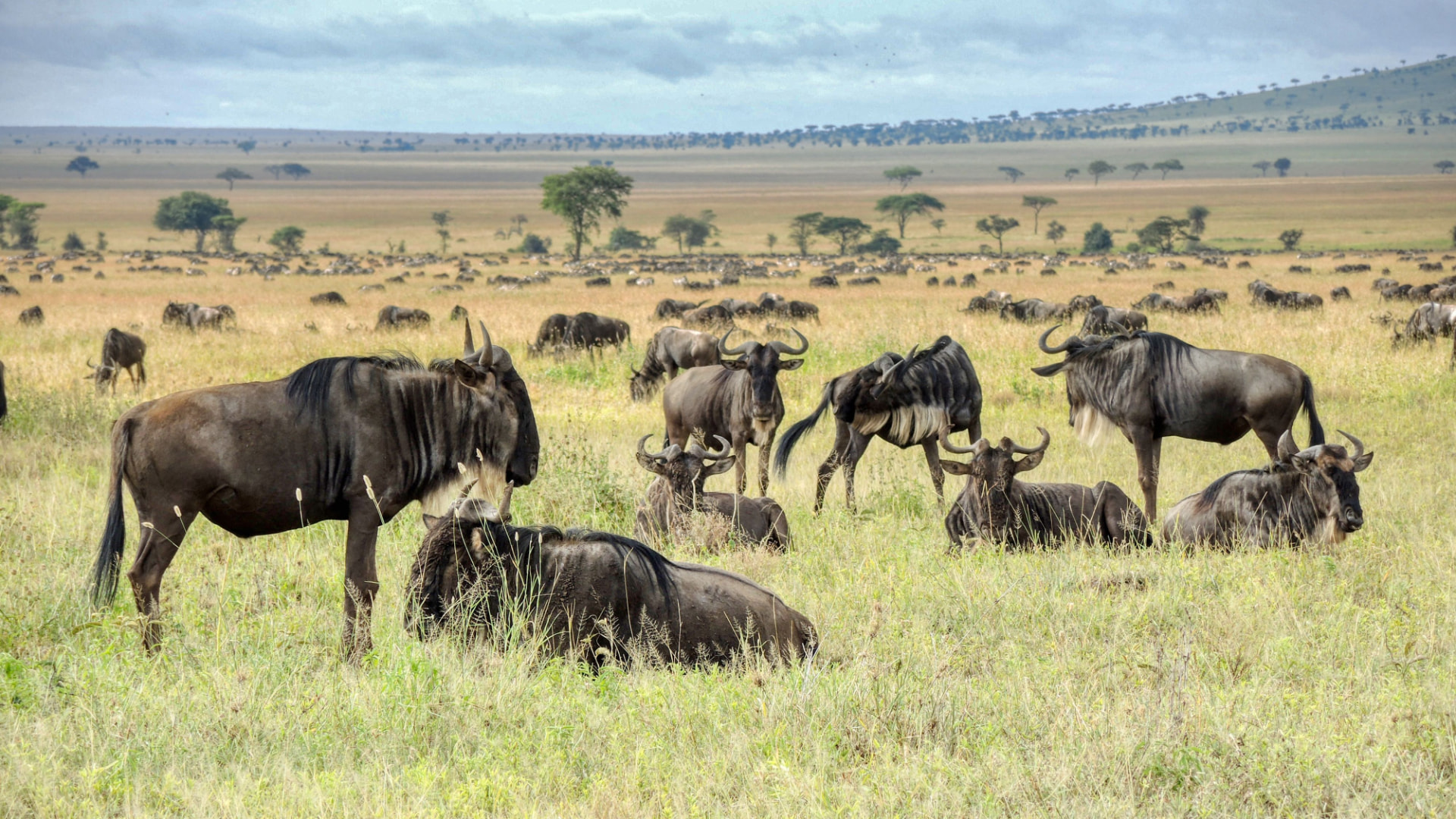
The Great Migration is different. Wildebeest, zebra and gazelle move with rainfall and fresh grazing, so their position shifts every year. The table below shows where the herds are generally found. We always check the latest reports before placing your camp, and we never promise river crossings or particular sightings.
| Month | Herds often in | What to expect |
|---|---|---|
| January | Southern Serengeti and Ndutu | Herds often gather on the short-grass plains as calving season commonly begins. |
| February | Southern Serengeti and Ndutu | Often the heart of calving season, with predators drawn to the herds. |
| March | Southern Serengeti and Ndutu | Calving often continues. The long rains may start late in the month. |
| April | Southern and central Serengeti | Long rains. Green, quiet and fewer visitors. Some camps close. |
| May | Central Serengeti and Western Corridor | Herds often begin to move west and north as the plains dry. |
| June | Western Corridor and Grumeti | Often a good area as herds move through. Timing varies each year. |
| July | Western Corridor to Northern Serengeti | Herds often move north. The dry season makes game viewing easier. |
| August | Northern Serengeti and Kogatende | Often an important month in the north. River crossings can happen but are never predictable. |
| September | Northern Serengeti and Kogatende | Herds are often in the north, moving between Tanzania and Kenya. |
| October | Northern and central Serengeti | Herds often start drifting south as the short rains approach. |
| November | Central and eastern Serengeti | Short rains. Herds often move back south. Quieter camps. |
| December | Central to southern Serengeti | Herds often return towards the southern plains. |
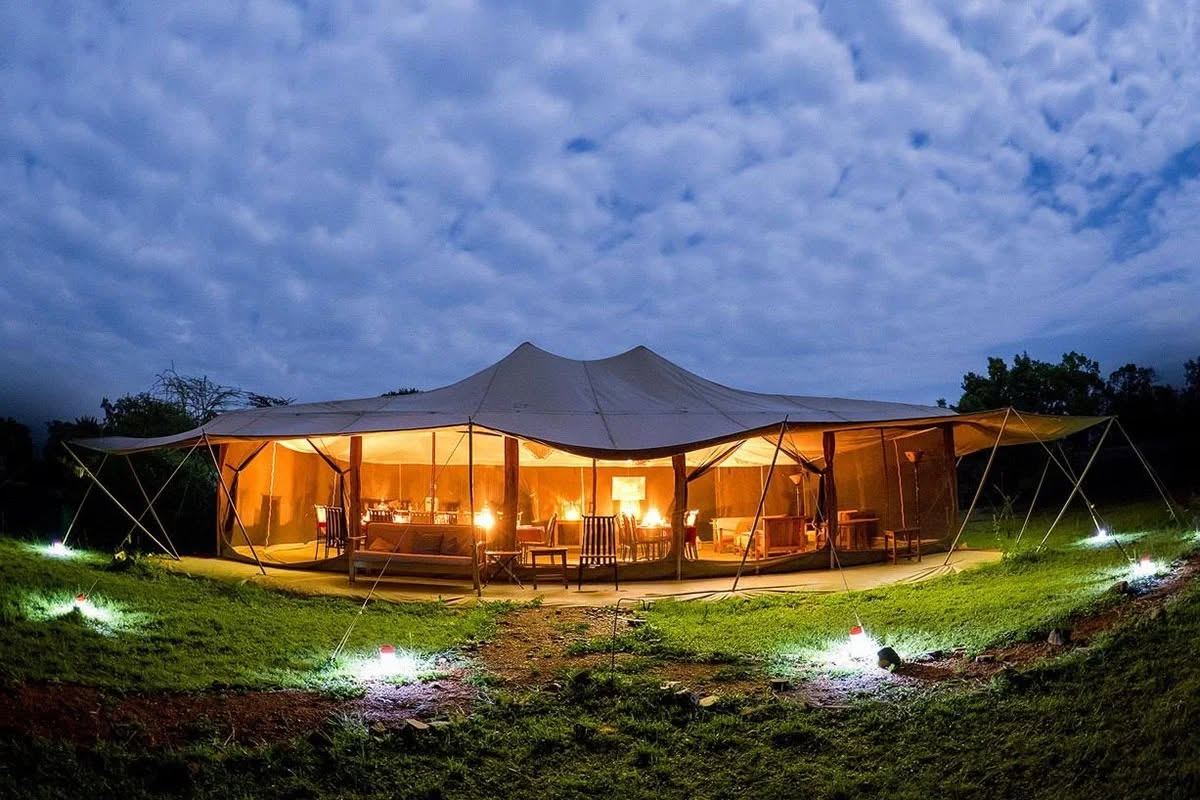
Camps range from simple tented camps to permanent luxury lodges, and some mobile camps move with the seasons to stay closer to the herds. Location counts for more than the name: a camp in the right region for your month can save hours of driving each day. For a three-night stay we often suggest one camp in the central Serengeti, or two camps in different regions when the herds are far from the centre.
Most Serengeti tours drive in from Arusha through the Ngorongoro highlands, which lets you combine the crater and Tarangire on the way. If time is short, scheduled light aircraft fly to several Serengeti airstrips, and your guide meets you there with the vehicle. Many of our best Serengeti safari trips mix the two: drive in, fly out.
A general guide only. Wildlife movement depends on rainfall, grazing and natural conditions. More on the Serengeti

The Ngorongoro Crater is a huge volcanic caldera with grassland, swamp, forest and a soda lake on its floor. Steep walls hold a high density of wildlife, which is why a single morning here can feel so rich.
On a game drive you may see lion, buffalo, elephant, hyena, zebra and wildebeest, with flamingoes along the lake when conditions suit them. The crater is also one of the places in Tanzania where black rhino can sometimes be seen.
We usually plan the crater for an early start, when the light is soft and there are fewer vehicles, with a picnic lunch on the floor. Nights are spent on the rim or in the cooler Karatu highlands, so pack a warm layer.

Famous for elephants and giant baobab trees. In the dry months wildlife gathers along the Tarangire River, making it a strong first stop out of Arusha. Tarangire guide

Forest, a dramatic escarpment and rich birdlife in a compact park. It works well as a short stop between Tarangire and Ngorongoro. Lake Manyara guide
Nyerere and Ruaha offer remote wilderness with few vehicles. Mikumi is reachable by road from Dar es Salaam. Mahale and Gombe are known for chimpanzees, and Katavi for its isolation. Ask us if you would like to go further.
A Tanzania safari and Zanzibar holiday is the most popular way to see the country. After early starts in the bush, a few days on the island give you time to rest, swim and explore Stone Town.
Each beach area has its own character. Tides on the east and southeast coasts can go out a long way, which affects swimming and beach access at some times of day. It varies by property, so we check the beach at every hotel we suggest.
We also plan the practical side: the flight from the mainland, transfers at both ends, baggage allowances, your meal plan and a sensible buffer before your flight home.
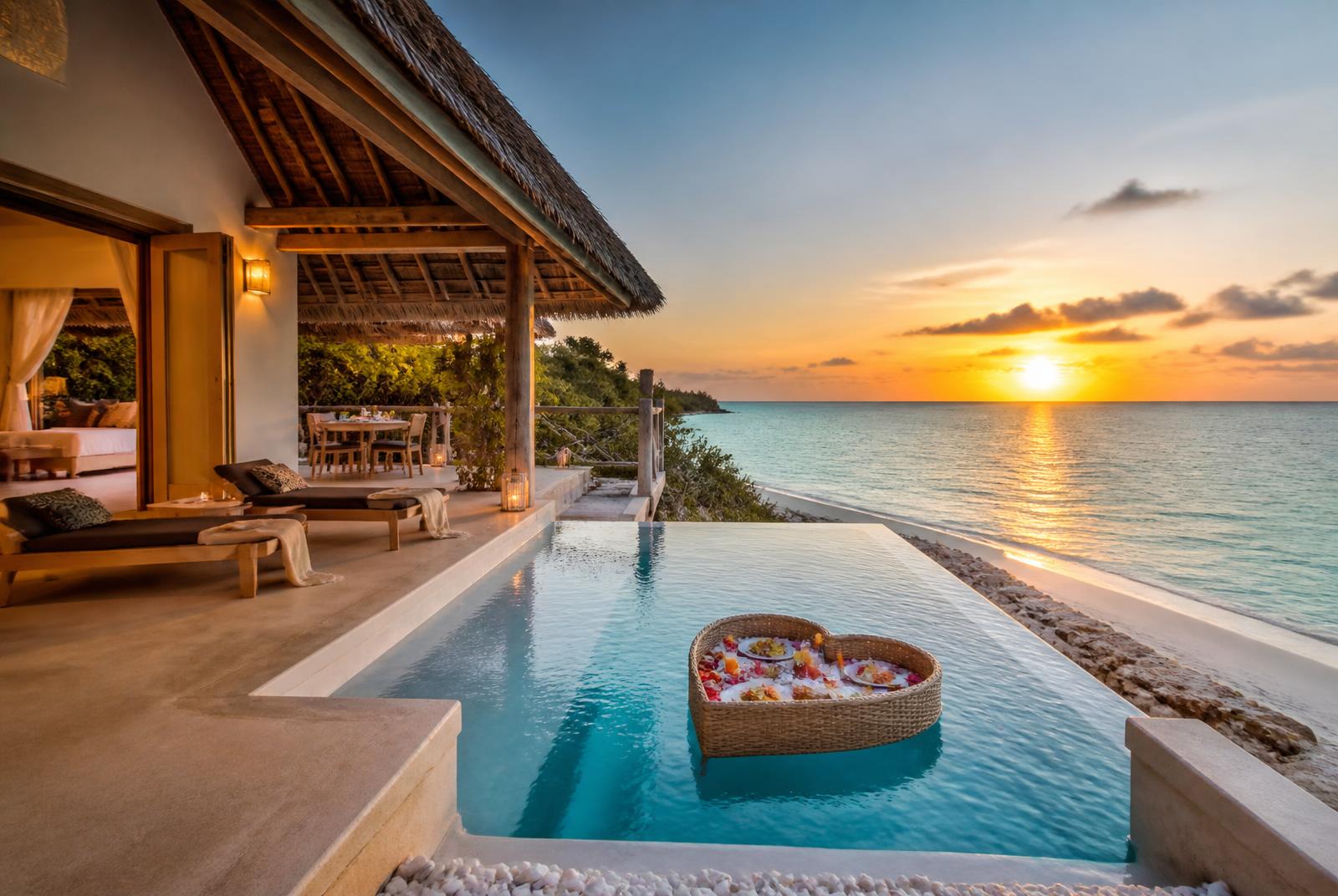
Popular and lively, and often chosen for swimming because the tide affects it less.
A broad beach with a swimming-friendly reputation and beautiful sunsets.
Known for kitesurfing and a lively beach scene. Tides are noticeable.
A village feel and a long shoreline. Suits travellers who like quiet walks.
Quiet and scenic, close to the reef. Often chosen for peaceful stays.
Home to many resort properties, with tides that can change beach access.
Quieter and resort-oriented, with some lovely sheltered spots.
A quieter setting and a base for marine excursions.
See also our Zanzibar holidays page.
Tarangire, the Serengeti and the Ngorongoro Crater in five well-paced days from Arusha.
The classic Northern Circuit at a comfortable pace, with three nights in the Serengeti.
Six days on safari, then the Indian Ocean. The most popular way to see Tanzania.
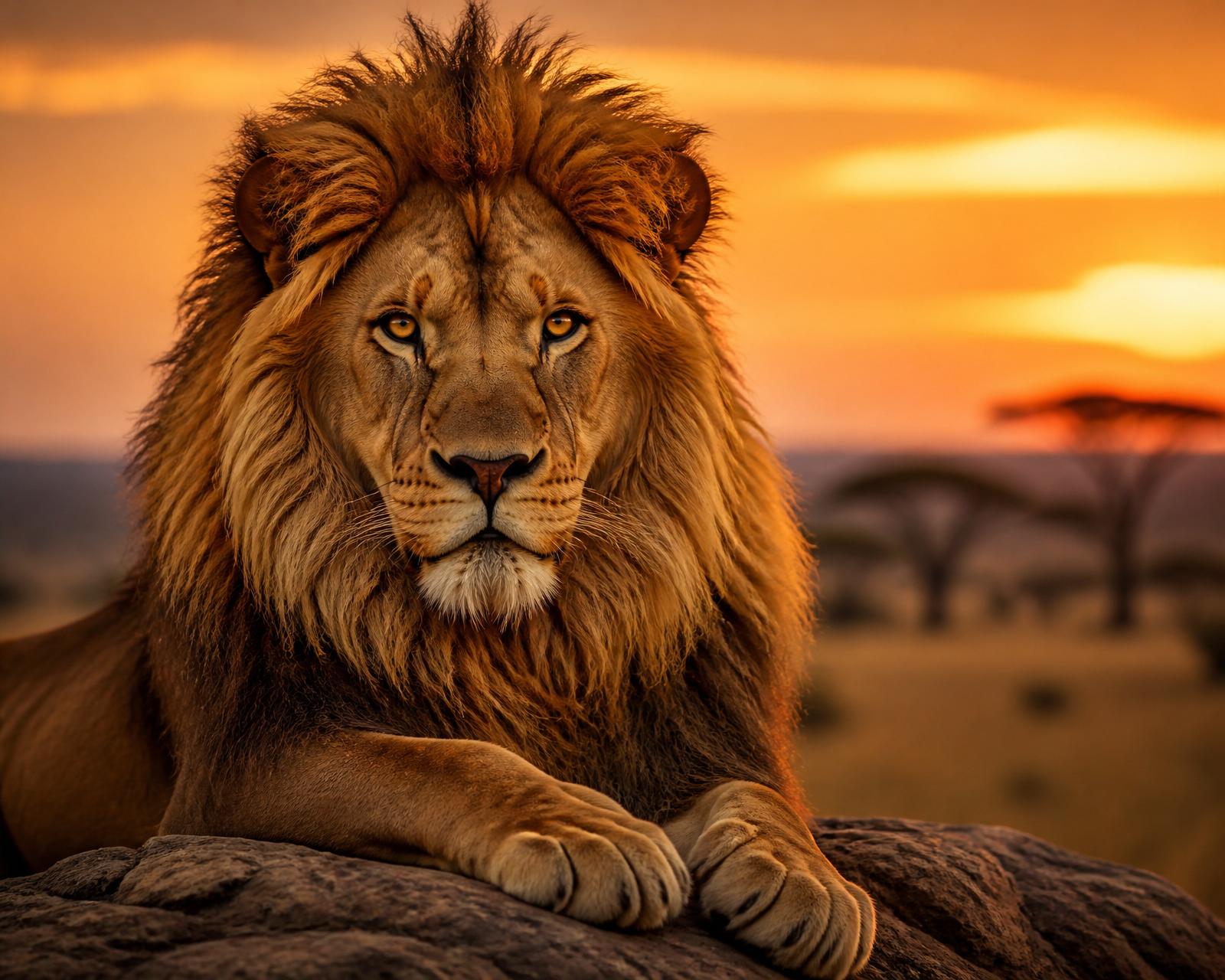
The Maasai Mara, the Serengeti and the Ngorongoro Crater, finished with a Zanzibar beach.
A slow, unhurried journey through the Maasai Mara, Tarangire, the Serengeti and the Ngorongoro Crater.
Light aircraft instead of long drives, with luxury camps in the Serengeti and on the crater rim.
The Maasai Mara in Kenya and the Serengeti in Tanzania are two halves of the same ecosystem, divided by a border the wildlife ignores. A safari in Kenya and Tanzania lets you see both, and gives you more chances to be near the herds.
Crossing between the two needs planning. You travel by road through an official border post or by flight. Vehicles and guides often change at the border, because safari vehicles are licensed in their own country. We confirm the route and handover for each trip.
Plan on the crossing being a travel day. Road transfer days are not full game-drive days, so we build them into the route honestly.
Your dates, who is travelling, what you want to see, the pace you enjoy and the budget you have in mind.
Parks placed in a sensible order, with enough nights in each and honest travel times between them.
Park fees, your vehicle and guide, transfers, flights and activities, so nothing important is missing.
Day by day, with what is included, what is not and the optional extras you can add.
There are many Tanzania safari companies, and the best safari in Tanzania for you depends on who plans it. Whoever you book with, look for these basics before you pay a deposit.
Tanzania safari cost varies widely, and a single headline price rarely tells you much. These are the things that make the biggest difference. Your quote shows each one clearly.
Peak dry-season months usually cost more than the green season.
Budget, midrange, comfort or luxury. This has the largest effect on price.
More nights add accommodation, park fees and vehicle days.
Charged by the authorities per person and often per day, and they change from time to time.
Fly-in safaris and Zanzibar extensions add flights but save driving time.
Sharing a private vehicle with more travellers lowers the cost per person.
Every trip we plan is private, so you are not sharing with strangers.
Balloon safaris, walking safaris and cultural visits are usually optional extras.
June to October is generally dry and easy for game viewing. January to March often suits the southern Serengeti. April and May are the long rains, quiet and green.
Speak to a travel health clinic well before you go about vaccines and malaria prevention. Some routes need a yellow fever certificate. Check current requirements before travel.
Neutral colours, warm layers for early drives and the cool crater rim, a hat, sunscreen and binoculars. Use soft bags if you have light aircraft flights.
Most visitors need a visa for Tanzania, and many can apply online. Zanzibar has its own arrival requirements. Rules change, so check current requirements for your passport before travel.
Tipping guides and camp staff is customary and appreciated. We share current guidance with your itinerary so you know what to plan for.
One considered email a month. Newly released permit dates, camps we have just inspected ourselves, and private departures we hold back for people on this list. No noise, unsubscribe in one click.
Tell us your month, your group and what you most want to see. We will design a realistic route and send a clear, tailored quote.
Tell us when you would like to travel and what matters most. A safari consultant replies with a suggested route, honest advice on the season and a clear quote. There is no cost and no obligation.
Itineraries, availability and rates are confirmed at the time of booking. Wildlife sightings and migration movements are natural and not guaranteed.